

The 'sachetization' principle is here to stay.
FMCG giants disrupted the market in the 1980s by creating sachets of everything from shampoo to coffee. By reducing the quantity, they increased accessibility, affordability, and adoption.
Almost four decades later, sachetization remains one of the most successful business innovations of our time. The same phenomenon has played out across industries.
Telecom companies introduced daily recharge plans. Cricket moved from five-day Test matches to One Day Internationals, then T20s, and now even T10 leagues.
Entertainment has followed suit. The latest explosion is the rise of micro dramas - short, highly engaging episodes designed for consumption on the go. The format has seen explosive growth because it aligns perfectly with modern consumption habits.
Consumers increasingly want smaller, faster, and more convenient experiences.
Learning should be no different.
And while microlearning looks simple, designing it is not easy. Compressing without compromising is an art.
The instinct most organizations have is to “cut” content. Take a 60-minute module and break it into six 10-minute videos. But that is not microlearning, that is fragmentation.
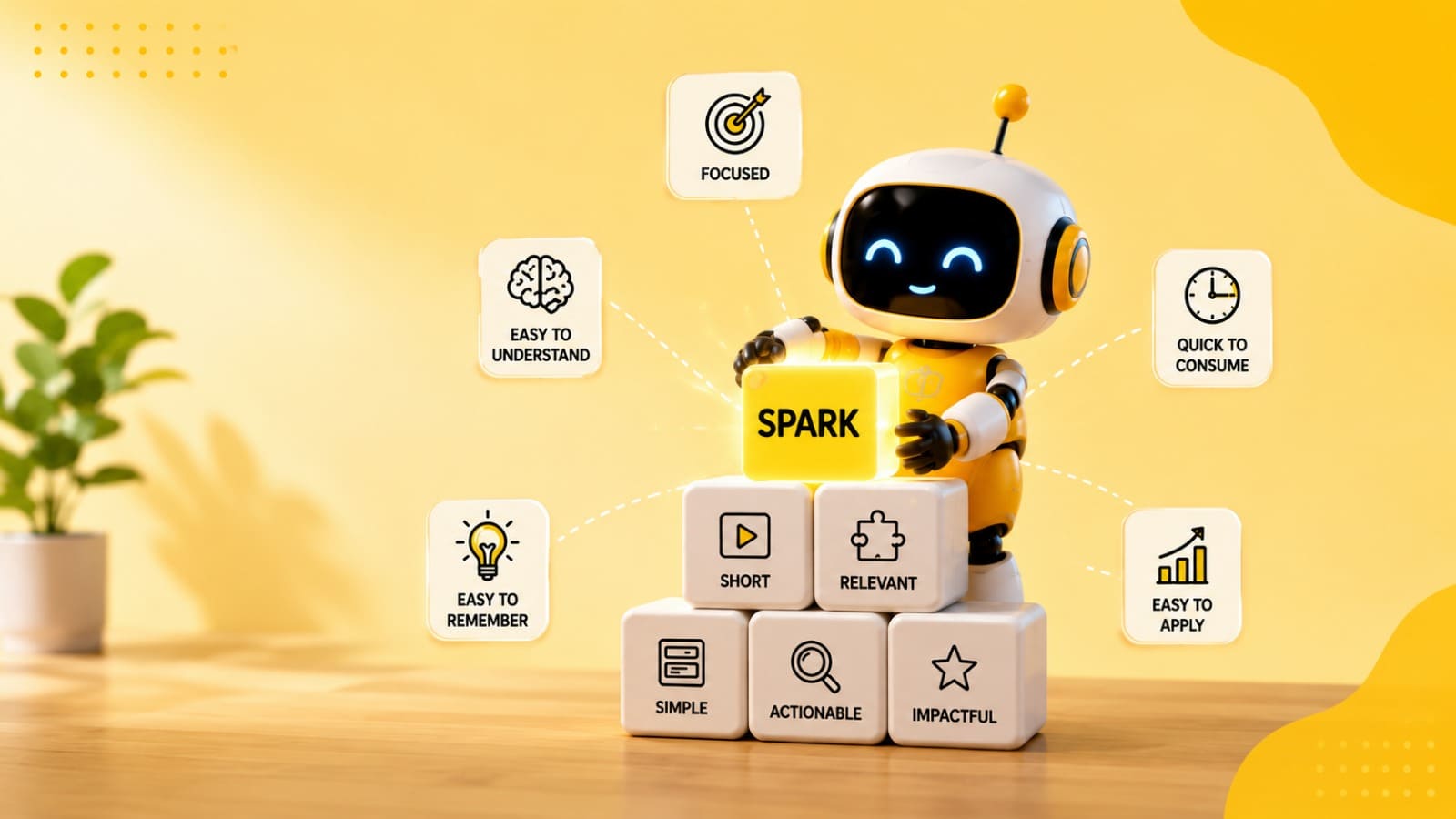
True bite-sized learning is not about duration. It is about design. It is about delivering one core idea, with absolute clarity, in a way that fits seamlessly into the learner’s day.
Microlearning delivers exactly what modern learners need: relevant information, delivered at the right moment, in a format that is easy to consume and even easier to apply.
This doesn't mean long-form learning is dead. Deep expertise still requires depth. But not every learning need requires a full course.
Sometimes a five-minute insight is all it takes to improve a customer conversation.
Sometimes a two-minute reminder can prevent a safety incident.
Sometimes a single idea can change behaviour.
Today’s learner is not allocating time for learning. They are squeezing it between tasks. This is where most e-learning fails. It demands attention instead of earning it.
Well-designed bite-sized learning flips that equation. It reduces the entry barrier. A 3-minute module feels achievable, even in a busy schedule. It improves retention. The brain prefers focused, meaningful chunks over overloaded information dumps. And most importantly, it drives action.
When a learner engages with one idea at a time, they are far more likely to apply it immediately.
A simple lens to apply is this: one idea, one objective, one action.
If your module is trying to do more, it is probably doing too much.
Imagine redesigning a traditional course into a sequence of sharp learning moments.
Each one solving a specific problem.
Each one timed to when the learner actually needs it.
Each one reinforced over time.
That is when learning stops being content and starts becoming behaviour.
Sachetization worked because it aligned with how people buy and consume. Bite-sized learning works because it aligns with how people live and work today.
And don’t fall for the common trap - short is not the goal, sharp is!